
Chapter 1 · 1 of 9
Born-digital art is software — and software rots
A growing part of our cultural record runs only as code, on platforms that are already gone. Conserving it is not a filing problem; it is a running problem.
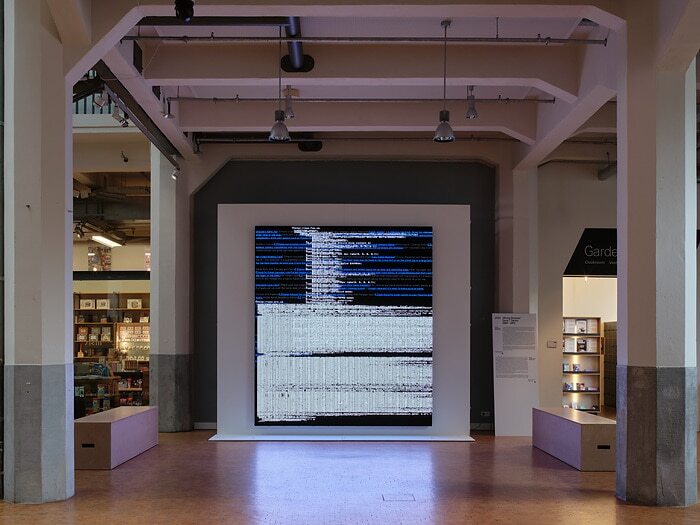
A large and growing part of contemporary art exists only as software: net-art, CD-ROM works, Flash and Shockwave pieces, early Java–QuickTime integrations, browser-based installations. Each was authored against a specific operating system, a specific plugin — a small add-on program a browser of the time needed to display certain content — and a specific set of network services. Those substrates are now obsolete or gone.
The artwork’s files may survive in an archive. But the conditions under which they become art — the right operating system, the right plugin version, the right server answering on the other end of a connection — do not. A folder of files is not a running work.
Why this matters
Museums and collections increasingly hold works like these, and they are expected to show them — not once for a demo, but reliably, for the months an exhibition runs, and again years later. A conservator must eventually decide how to keep each work alive: migrate it, emulate it, re-create it, or document it. But you cannot responsibly decide what you do not understand, and you cannot understand a piece of software you cannot run and observe.
Two different problems
Keeping such art alive turns out to be two distinct tasks, and conflating them is a common mistake:
- Exhibiting a work means keeping one known-good state running unattended for months, recovering automatically from every crash.
- Researching a work means the opposite: opening it up, exposing its state, trying things, breaking them, and rolling back — without anything resetting your work behind your back.
This site introduces two tools, one for each task, that grew out of the same exhibition: the Exhibition VM Controller and the Research VM Controller. We start with the work, and the exhibition, that made both necessary.